Professional Ultrasonic Pest Repeller — A Complete Guide to Humane Pest Control
A professional ultrasonic pest repeller is a device designed to discourage unwanted pests — such as rodents, insects, and other small animals — from entering or staying in a space by emitting high‑frequency sound waves. These sound waves are typically inaudible to humans and larger pets but are irritating to many pests, encouraging them to avoid the area over time.
Unlike single‑room, consumer models, professional ultrasonic pest repellers are built for broader coverage, stronger signal output, and more consistent performance — making them suitable for larger homes, commercial spaces, warehouses, farms, and outdoor areas.
How Professional Ultrasonic Pest Repellers Work
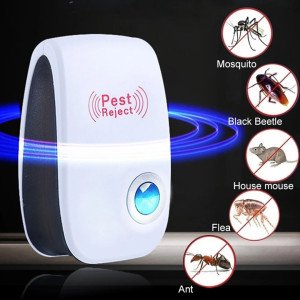
Professional ultrasonic pest repellers emit high‑frequency waves that create an uncomfortable environment for pests such as:
- Mice and rats
- Cockroaches
- Spiders
- Ants
- Fleas
- Beetles
- Other crawling or flying insects
The sound waves interfere with pests’ sensory systems, especially their hearing and communication, encouraging them to move away from the treated area without being harmed.
Key aspects of how these devices function:
- High‑frequency ultrasonic sound: Usually above 20 kHz, outside human hearing.
- Variable or pulsed signals: Prevent pests from becoming accustomed to a single frequency.
- Wide coverage area: Professional units are designed to affect larger spaces.
- Motion or continuous activation: Devices may emit sound continuously or only when motion is detected.
Professional models often use more advanced circuitry and multiple speaker arrays to cover large rooms or segmented spaces.
Typical Features of Professional Repellers
1. Wide Coverage Area
Professional units are engineered to cover hundreds or even thousands of square feet — ideal for open spaces, warehouses, shops, basements, and outdoor patios.
2. Multi‑Frequency Emission
Rather than a single tone, these devices may cycle through a range of ultrasonic frequencies. This variation makes it harder for pests to adapt.
3. Adjustable Settings
Many professional repellers allow adjustment of frequency, volume, operation mode (continuous or motion‑activated), and timing.
4. Durable, Weather‑Resistant Design
Models intended for outdoor use are often waterproof or weatherproof, with rugged construction for long‑term performance in gardens, yards, or near building exteriors.
5. Multi‑Unit Networking
Professional setups may support placement of multiple devices that work in tandem for full property coverage.
6. Power Options
- AC plug‑in models for indoor use
- Battery or solar‑assisted models for outdoor areas
- Hybrid units that switch power modes based on location
Benefits of Using a Professional Ultrasonic Pest Repeller
Humane and Non‑Toxic
Ultrasonic repellents do not kill or harm pests — they simply create an environment that pests prefer to avoid.
Safe for People and Most Pets
Sound frequencies are usually undetectable by humans and are considered safe for dogs, cats, and other large animals.
Chemical‑Free
No poisons, traps, or toxic substances are used, reducing risk to children, pets, and stored goods.
Low Maintenance
Once installed, the devices need little upkeep — no baiting, no regular replacement of consumables.
Customizable Coverage
With adjustable settings, professional units can be tailored to specific environments and pest challenges.
Limitations and Considerations
Even professional ultrasonic pest repellers are most effective as part of a comprehensive pest management strategy rather than a standalone solution. Some considerations:
Physical Obstacles Reduce Effectiveness
Ultrasonic sound waves don’t travel through walls, furniture, or solid barriers well, so multiple units or strategic placement may be needed.
Effectiveness Varies by Pest
Some pest species respond more strongly to ultrasonic waves than others. Rodents like mice and rats are often more sensitive than certain insects.
Not Instant Elimination
Ultrasonic repellents create a deterrent over time — they discourage pests from settling in an area, but may not immediately remove established infestations.
Supplementary Methods Improve Results
Pairing repellents with sanitation, exclusion (sealing entry points), traps, and habitat modification enhances overall effectiveness.
Strategic Placement Tips
Indoors:
- Place near likely entry points
- Install at eye level or where pests travel
- Avoid placing behind large objects or furniture
Outdoors:
- Use weatherproof units near patios, gardens, or building perimeters
- Position to maximize open area coverage
- Combine with reflective surfaces (concrete, tile) for broader sound propagation
Multiple Units: In large or segmented spaces, use multiple units spaced out to avoid blind spots and overlapping coverage.
Typical Use Cases
Professional ultrasonic pest repellers are suited for:
- Large homes and apartments
- Commercial kitchens and restaurants
- Warehouses, storage facilities, and garages
- Farms and agricultural spaces
- Outdoor patios and landscaped areas
- Retail spaces and offices
These devices help reduce pest activity without disrupting business or living environments.
Summary
A professional ultrasonic pest repeller is a humane, safe, and chemical‑free solution for reducing the presence of mice, rats, insects, and other pests in large spaces. By emitting high‑frequency sound waves that are irritating to pests but generally inaudible to humans, these devices help discourage pests from entering or lingering in treated areas.
They are most effective when used strategically and in combination with good sanitation and exclusion practices. With adjustable settings, wide coverage, and rugged design, professional ultrasonic repellents can be a valuable part of a modern pest control strategy for homes, businesses, and outdoor environments.
If you’d like, I can explain how to choose the best repeller based on your space size and specific pest challenges — just let me know your situation.